
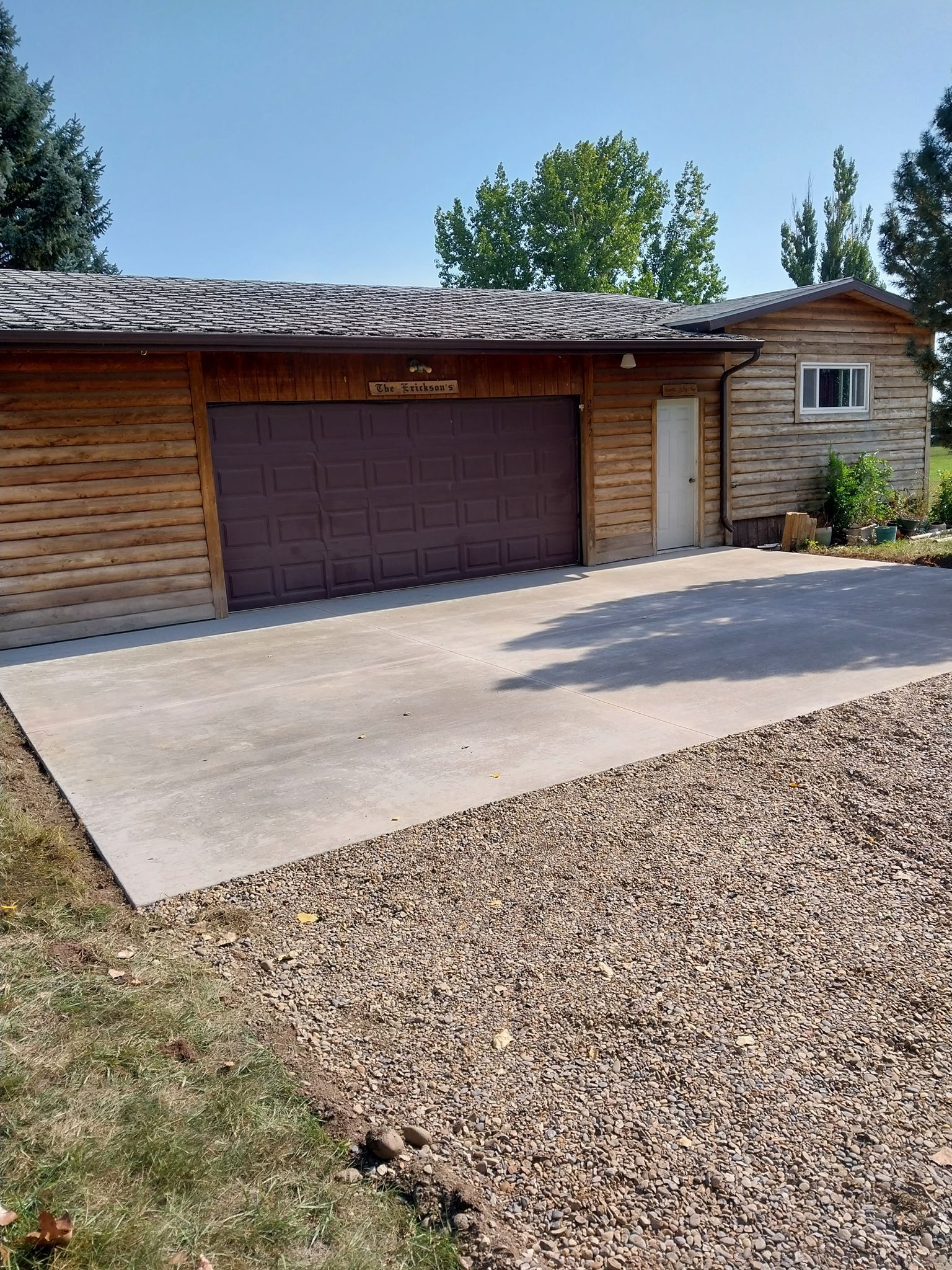
Built to Last Through Every Montana Season
Concrete Driveways & Walkways in Sidney for homes where gravel fails and asphalt cracks under temperature swings
Finish Line Concrete installs residential and commercial driveways and walkways throughout Sidney and the surrounding rural areas using proper base preparation, structural reinforcement, and finishing techniques that account for freeze-thaw cycles and heavy vehicle loads. You rely on your driveway every day, and when it cracks or settles unevenly, it becomes more than a visual problem—it creates drainage issues, trip hazards, and accelerated deterioration that spreads each winter.
This service includes excavation to proper depth, compacted gravel base installation, forming to grade, and pouring concrete mixed to withstand regional temperature extremes. You choose between broom finish for traction, smooth finish for easier snow removal, or decorative options that add texture and color without sacrificing durability. The thickness and reinforcement are determined by whether the surface will handle daily passenger vehicles, work trucks, or farm equipment.
If your current driveway has become a maintenance burden or you need a reliable access path installed on a new build or rural property, reach out to discuss material options and project scheduling.
What You'll Notice After the Pour
Your new driveway or walkway starts with a stable, compacted base that prevents the shifting and settling common in properties with clay-heavy or poorly draining soil. Finish Line Concrete uses laser-guided grading tools to set forms that direct water away from foundations and entry points, so you won't see pooling after spring melt or summer storms.
Once the concrete cures, you'll have a surface that stays level under the weight of vehicles, resists cracking through winter cold snaps, and requires no annual resealing or patching like asphalt. The finish you select affects how the surface performs in wet or icy conditions—broom finishes provide better grip when temperatures drop, while smooth finishes make plowing and sweeping more efficient.
Control joints are cut at regular intervals to manage where shrinkage cracks occur, keeping them narrow and controlled rather than random and spreading. Proper curing time is built into the schedule, so you won't be asked to drive on the surface before it reaches full strength. If decorative enhancements are included, they're applied during the finishing process, not added later as a separate coating that can peel or wear unevenly.
Questions About Driveway and Walkway Work
Homeowners in Sidney often ask about timing, base requirements, and how different finishes hold up under local conditions.
How thick does a residential driveway need to be?
Most driveways are poured at four to six inches depending on vehicle weight, with thicker sections near aprons or turnarounds where loads concentrate during backing and turning.
What happens if the ground freezes before the concrete is poured?
Work is scheduled when ground temperatures allow for proper excavation and curing, typically avoiding late fall and early spring when frost depth becomes unpredictable.
Why does the base layer matter more than the concrete itself?
A poorly compacted or thin gravel base allows the slab to shift and crack regardless of concrete quality, especially in areas with freeze-thaw cycles that move moisture through the subgrade.
When should you choose broom finish over smooth finish?
Broom finish adds slip resistance for steep driveways or areas that ice over frequently, while smooth finish works better where snow removal equipment is used regularly and traction is less of a concern.
How long before you can park on a new driveway?
You'll need to keep vehicles off the surface for at least seven days to allow adequate strength development, though full curing continues for several weeks after that initial period.
Finish Line Concrete works with property owners throughout the Sidney area who need durable, properly graded concrete surfaces that handle the realities of rural access and seasonal weather. Contact the team to review site conditions, discuss finish options, and get a project estimate based on your property layout.