
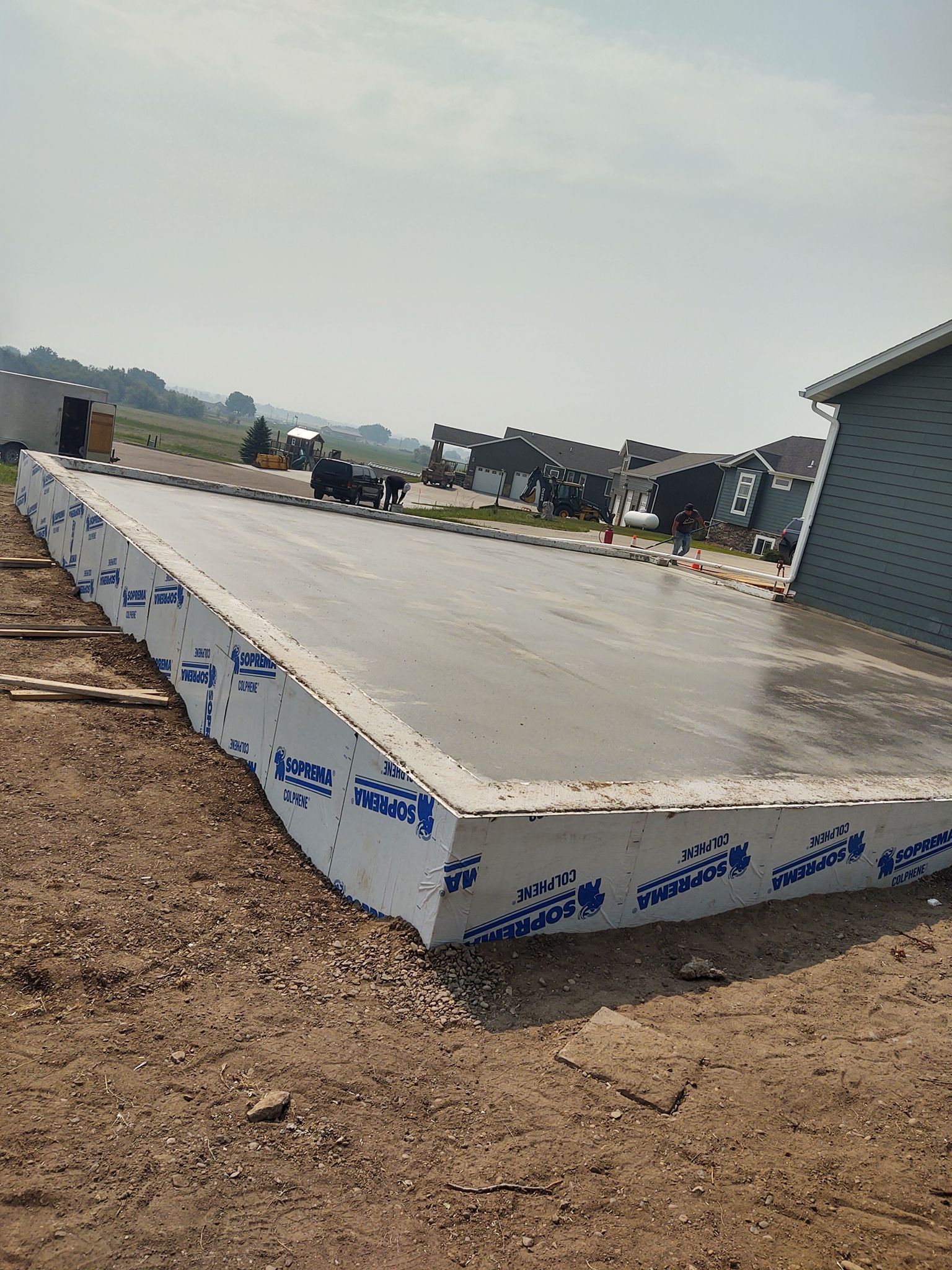
Structural Support That Holds Through Frost and Settling
Concrete Foundations in Sidney for new builds and outbuildings where soil movement and frost depth dictate foundation design
Finish Line Concrete pours residential and outbuilding foundations in Sidney and surrounding areas, specializing in both four-foot and nine-foot depths engineered to meet local frost line requirements and soil load conditions. When you're planning a home, garage, or barn, the foundation determines whether the structure stays level, whether walls crack from shifting, and whether water infiltrates the basement or crawlspace over time.
The process begins with excavation to the required depth, followed by forming that establishes wall thickness, height, and placement of anchor bolts or embedded steel. Concrete is mixed and poured in a continuous process to avoid cold joints, then finished with attention to level, plumb, and proper reinforcement placement. In areas with expansive clay or variable soil density, additional measures such as increased rebar spacing or thickened footings are included to distribute loads and resist movement.
If you're beginning construction on a new building or replacing a compromised foundation, contact Finish Line Concrete to schedule a site assessment and discuss structural requirements.
How Foundation Work Affects the Rest of Your Build
Your foundation must extend below the frost line to prevent heaving during freeze-thaw cycles, which in this region typically means reaching four feet or deeper depending on soil type and drainage patterns. Finish Line Concrete uses forming systems that maintain precise dimensions and vertical alignment, so framing crews can begin work without adjusting for out-of-square or uneven walls.
Once the pour is complete and the forms are stripped, you'll see smooth walls with consistent thickness, level tops ready for sill plates or masonry, and properly positioned anchor bolts that match your framing plan. The concrete cures over several days, during which it gains the compressive strength needed to support roof loads, snow accumulation, and interior finishes without cracking or deflecting.
Footings are poured first in most cases, widening the base to spread structural loads across a larger soil area and reduce the risk of settling. Waterproofing and drainage are not included in the foundation pour itself, but the exterior surface is finished smooth enough to accept membrane or coating systems applied by others. Backfilling is timed to allow adequate curing, preventing pressure damage to walls that haven't yet reached full strength.
Common Foundation Questions in Sidney
Builders and homeowners often need clarity on depth requirements, curing time, and how local soil conditions affect the work.
Why pour a nine-foot foundation instead of a four-foot crawlspace?
A nine-foot foundation creates a full basement with usable headroom, adding living or storage space, while a four-foot foundation provides adequate frost protection for structures without basements.
How long does a foundation need to cure before framing can start?
You should wait at least seven days before loading the walls with framing lumber and roof trusses, though full strength develops over the course of a month.
What happens if the excavation hits groundwater or clay?
The foundation design may require drainage tile, gravel backfill, or adjusted footing width to handle water movement and prevent hydrostatic pressure against the walls.
When is reinforcement required in a residential foundation?
Rebar is placed in footings and walls to handle tensile stress, especially in areas where soil expansion, seismic activity, or uneven bearing conditions are present.
How does frost depth in Sidney affect foundation design?
Footings must sit below the maximum frost penetration depth to prevent seasonal movement that cracks walls and shifts the structure off level.
Finish Line Concrete coordinates with excavators, framers, and inspectors to deliver foundations that meet code, match your building plans, and provide a stable base for long-term construction. Get in touch to discuss foundation depth, reinforcement details, and project timelines for your next build.