Building for Heavy Use and Hard Conditions
Oilfield Concrete & Site Services in Sidney for well pads, equipment areas, and containment systems under constant load
Finish Line Concrete repairs damaged concrete for homeowners or business owners dealing with cracks, surface deterioration, or slabs that have settled and no longer drain properly. If your driveway has wide cracks that let water underneath, your sidewalk has lifted or sunk in sections, or your patio surface is flaking and rough, repair work restores function and appearance without the cost of full replacement. You extend the life of the existing concrete and eliminate trip hazards or drainage problems that get worse over time.
The repair process includes cleaning out cracks, removing loose or damaged material, filling voids beneath settled slabs, and applying resurfacing compounds or structural patches depending on the severity of the damage. In climates where freeze-thaw cycles cause concrete to crack and spall, timely repairs prevent water infiltration that accelerates deterioration. The crew uses epoxy injection for structural cracks, polyurethane foam for slab lifting, and overlay systems for surfaces that are worn but still structurally sound.
If your concrete is showing signs of damage or settling, request an inspection and repair estimate in Sidney to determine the best approach.
Why Oilfield Work Demands Different Standards
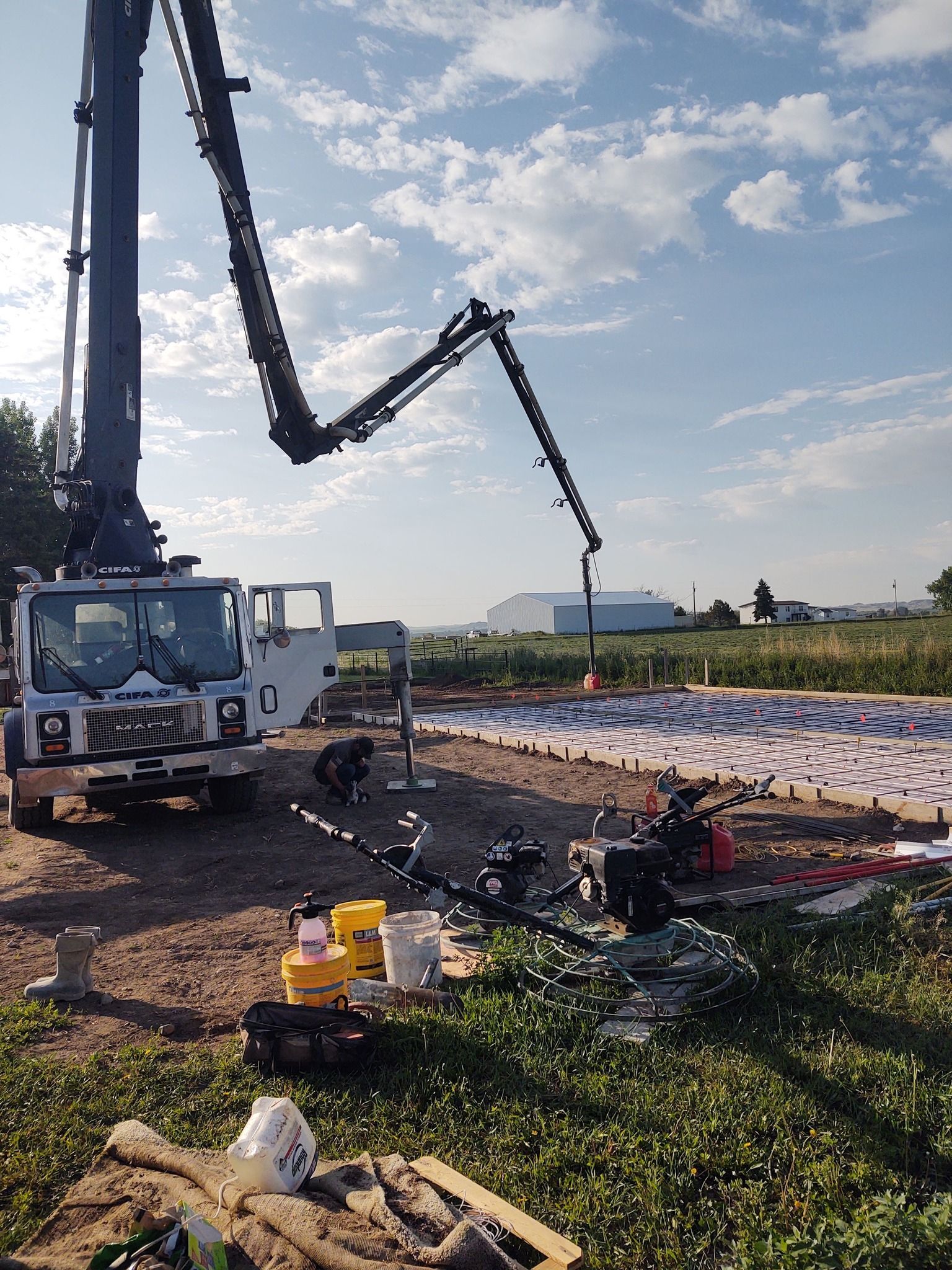
You cannot use residential-spec concrete for areas that will see rig equipment, tanker trucks, and year-round weather exposure without failure. Finish Line Concrete designs slabs with adequate thickness, proper reinforcement spacing, and control joints placed to manage cracking in predictable locations. The crew works around active drilling schedules, coordinates with other contractors on site, and follows safety protocols required for oilfield access.
After installation, you will have a level, stable pad that drains properly, supports equipment without settling, and meets containment or regulatory requirements if applicable. The surface is dense and finished to resist wear from tracked vehicles and chemical exposure. Finish Line Concrete also handles ongoing site maintenance, expansions, and repairs for operators who need a reliable contractor familiar with oilfield conditions and schedules.
The service includes site preparation, concrete placement, and grading, but it does not cover permitting, environmental compliance reporting, or installation of mechanical systems such as tanks or piping. If your project requires containment systems or specialty finishes, those details are planned during the bidding and design phase to ensure the final installation meets operational and regulatory needs.
What You Need to Know About Oilfield Concrete
Concrete for oilfield use is built to different standards than residential or commercial work, so here are answers to common questions about materials, design, and installation.
What thickness is required for equipment pads?
Pad thickness depends on the equipment being supported, but most well pads and heavy equipment areas require at least six to eight inches of reinforced concrete, with thicker sections under concentrated loads such as rig footings.
How is drainage managed on oilfield sites?
The crew grades the pad to direct water and fluids toward containment areas or collection points, and in some cases, curbs or berms are poured around the perimeter to prevent runoff from leaving the site.
When should site work be scheduled relative to drilling operations?
Site prep and concrete placement are typically completed before rig mobilization, but Finish Line Concrete can also work around active operations when expansions or repairs are needed during production.
Why is reinforcement critical in oilfield concrete?
Rebar and fiber reinforcement prevent cracking under heavy loads and temperature swings, and they distribute stress across the slab to avoid localized failures that create safety hazards or operational downtime.
What site conditions in Sidney affect oilfield concrete work?
Cold weather, muddy access roads, and remote locations require planning for concrete curing, equipment transport, and timing, and Finish Line Concrete schedules pours to avoid freezing temperatures and coordinates with site managers to ensure safe access.
If you have an oilfield project that requires durable site work and concrete built to handle industrial conditions, Finish Line Concrete can provide estimates, timelines, and ongoing contractor support tailored to your operation.