Floors Built to Handle Weight, Moisture, and Constant Use
Garage, Basement & Commercial Flooring in Sidney for spaces where untreated concrete cracks, dusts, and absorbs stains from daily activity
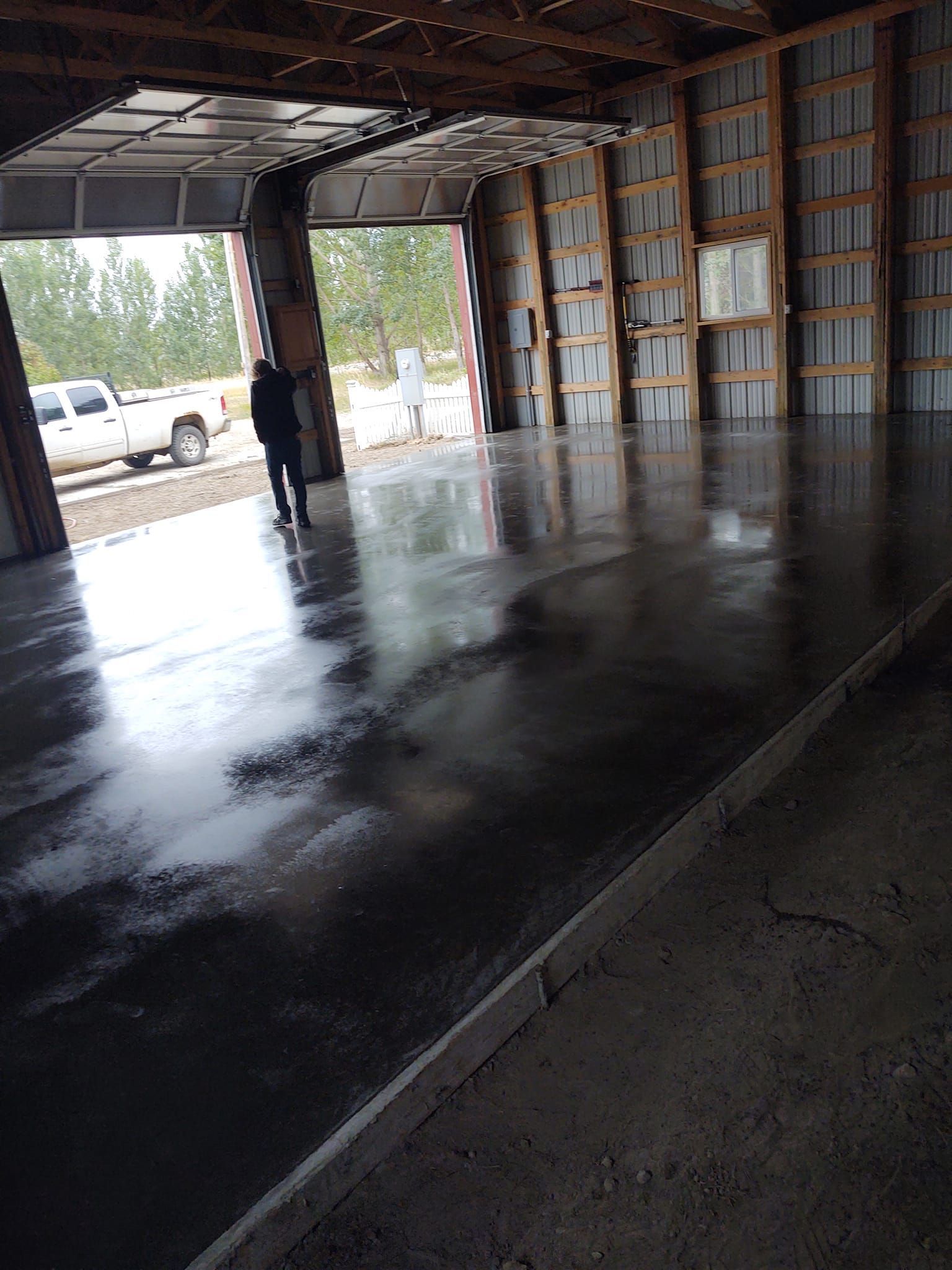
Finish Line Concrete installs and finishes interior floor systems for garages, basements, and commercial facilities in Sidney and the surrounding region, using sealed, coated, or polished concrete surfaces designed to withstand heavy equipment, foot traffic, and moisture exposure. When your floor shows signs of surface deterioration, dusting, or staining that regular cleaning can't fix, a properly finished system makes the space more usable and extends the life of the underlying slab.
The work begins with evaluating the existing slab for cracks, moisture issues, and surface integrity, then proceeds with grinding or patching as needed to create a sound substrate. Depending on your needs, the floor may receive a penetrating sealer that hardens the surface and reduces dusting, a topical coating that provides chemical and abrasion resistance, or a polished finish that combines durability with a refined appearance suitable for retail or office environments.
If your garage, basement, or business facility needs a floor that performs better under real-world conditions, contact Finish Line Concrete to review options and schedule an assessment.
How Finished Floors Change Daily Use
Your treated floor becomes a surface you can sweep or mop without raising dust clouds, where oil and fluid spills stay on top long enough to wipe away, and where tire tracks and scuff marks don't become permanent features. Finish Line Concrete selects sealers and coatings based on the specific loads and exposures your floor will face, so a commercial warehouse receives a different system than a residential basement storage area.
Once the floor is finished, you'll notice improved light reflection, reduced need for repainting or patching, and a cleaner overall environment that doesn't contribute particulate to the air or track dirt into adjacent rooms. Moisture-resistant systems prevent water vapor from migrating up through the slab, which is especially important in basements where humidity and seasonal groundwater levels fluctuate.
Coated systems form a continuous barrier that protects the concrete beneath, while sealed systems penetrate the surface to strengthen it from within without changing the appearance significantly. Polished floors go through progressive grinding and honing stages to expose aggregate and create a dense, wear-resistant surface that doesn't require waxing or ongoing topcoat applications. Heavy shelving, forklifts, and rolling equipment can be used on finished floors once the curing period is complete, typically within three to seven days depending on the product applied.
Flooring System Questions
Property owners and facility managers often need clarity on durability, maintenance, and how different finishes perform over time.
What causes concrete floors to dust even when they look solid?
Surface dusting occurs when the top layer of concrete wasn't properly finished or cured, leaving loose particles that break free under traffic and abrasion.
How do sealed floors differ from coated floors in terms of maintenance?
Sealed floors require occasional reapplication of sealer as it wears, while coated floors need cleaning but typically don't require recoating for several years under normal use.
Why are moisture issues more common in basement floors than garage slabs?
Basements sit below grade and are surrounded by soil that holds water, creating hydrostatic pressure that forces vapor and liquid through the slab if drainage and vapor barriers are inadequate.
When should you polish concrete instead of coating it?
Polishing works best in commercial or retail settings where appearance and long-term durability are priorities, while coatings are better suited to spaces with heavy chemical exposure or specific aesthetic requirements.
How do Sidney winters affect indoor concrete floors?
Temperature swings can cause slabs to expand and contract, so finishes must remain flexible enough to move with the concrete without cracking or delaminating.
Finish Line Concrete works with homeowners and business operators throughout the Sidney area to install flooring systems that match how the space is actually used. Reach out to discuss surface conditions, expected traffic levels, and finish preferences for your next flooring project.