Building Walls That Insulate and Support
Styrofoam Block Wall Systems in Sidney for new construction requiring insulated, energy-efficient foundation or wall assemblies
Finish Line Concrete installs insulated concrete form systems, commonly called ICF or styrofoam block walls, for homeowners and builders constructing foundations and walls that need both structural strength and thermal performance. If you are building in a climate with cold winters and you want a foundation that reduces heat loss, resists moisture, and supports heavy loads, ICF systems provide continuous insulation around the concrete core. You gain energy efficiency and durability in a single assembly instead of layering separate insulation and structural materials.
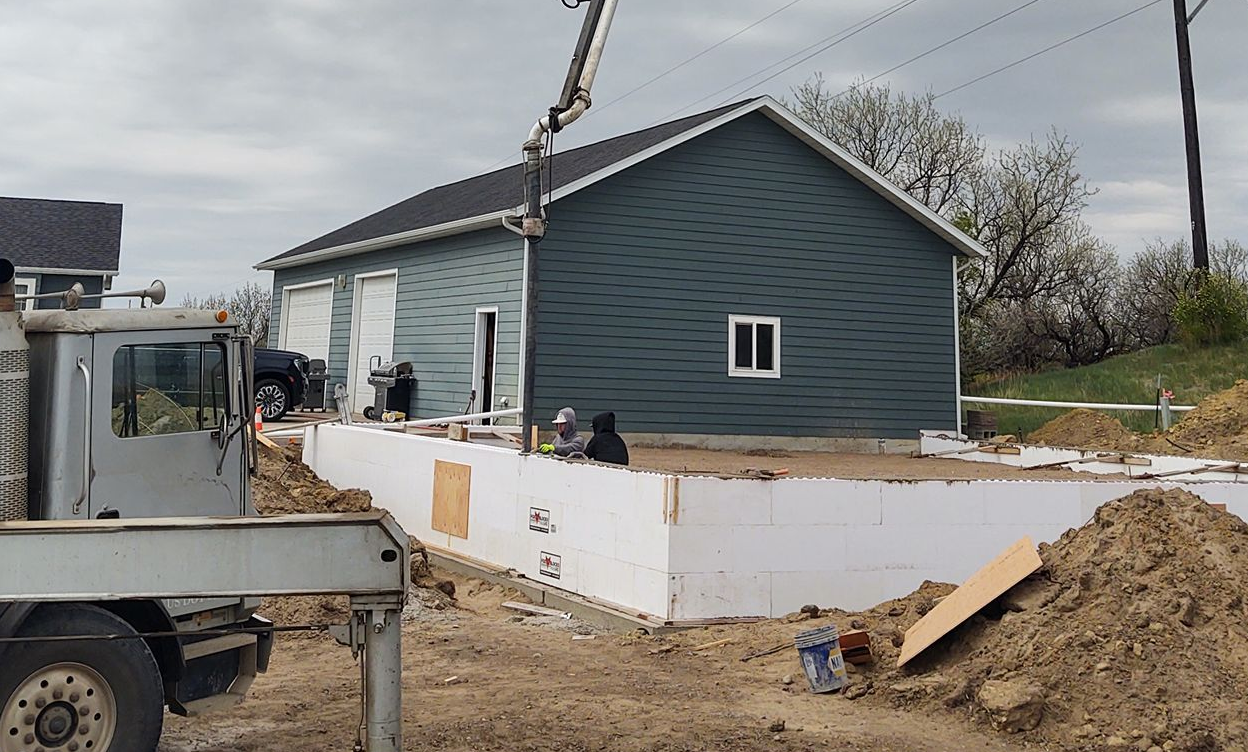
The installation involves stacking interlocking foam blocks to the desired wall height, reinforcing with rebar according to engineering specifications, and pouring concrete into the hollow cores. The foam remains in place as permanent insulation on both sides of the concrete, creating an R-value significantly higher than standard poured walls. The system works well for below-grade foundations, above-grade walls, and specialty structures where temperature control and structural integrity are both priorities.
If you are planning new construction and want to evaluate insulated wall options, contact Finish Line Concrete for a consultation in Sidney.
Why ICF Systems Perform in Extreme Conditions
You get a wall assembly that handles freeze-thaw cycles without cracking, maintains consistent indoor temperatures, and resists moisture infiltration that can damage conventional foundations. The foam blocks are lightweight and easy to adjust during installation, but once the concrete is poured, the wall becomes a monolithic structure with no thermal bridging or weak points. Finish Line Concrete sets the forms level and plumb, places rebar to meet structural requirements, and pours concrete in lifts to prevent blowouts or displacement.
After installation, you will have a foundation or wall that stays warmer in winter, requires less energy to heat or cool, and provides a sound barrier that reduces noise transmission. The surface is ready for interior finishes or exterior cladding, and because the insulation is integral to the wall, there is no need for separate foam board or batt insulation in those sections. Finish Line Concrete also coordinates ICF installation with other site work, including excavation, grading, and drainage, to ensure the foundation is set on stable, well-drained ground.
The service includes form assembly, reinforcement placement, and concrete placement, but it does not cover exterior finishes such as stucco, siding, or interior drywall, which are handled by finish contractors. If your project requires engineering or building department approval, the crew works with your designer to meet local code and structural specifications.
What You Should Know About ICF Walls
Styrofoam block wall systems differ from traditional poured concrete foundations, so here are answers to questions about how they are built and what they offer.
What is the R-value of an ICF wall?
Most ICF systems provide an R-value between R-22 and R-26, depending on foam thickness and block design, which is significantly higher than a standard poured concrete wall with no insulation.
How do you attach finishes to foam block walls?
Furring strips, metal tracks, or adhesive systems are used to attach interior drywall and exterior cladding directly to the foam surface, and fasteners must penetrate through the foam into the concrete core for structural connections.
When is an ICF system a better choice than traditional concrete?
You choose ICF when energy efficiency, sound dampening, and long-term thermal performance are priorities, especially in climates like Sidney where heating costs and temperature swings make insulation a functional requirement.
Why is rebar placement important in ICF construction?
Rebar provides tensile strength that concrete alone cannot supply, and proper placement according to engineering plans ensures the wall can resist lateral loads, settling, and environmental stresses without cracking.
What does the installation process look like?
The crew stacks foam blocks on a level footing, braces the forms to prevent movement, places rebar vertically and horizontally as specified, then fills the cores with concrete using a pump or bucket system, checking alignment throughout the pour.
If you are ready to build with insulated concrete forms, Finish Line Concrete can provide material estimates, installation timelines, and coordination with your project schedule.